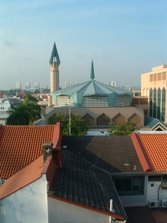
Singapore received 98,574 tourists from the Middle East, mostly the GCC region, in 2007.
This represents a 73% increase over 2002, when there were 57,000 visitors from the Middle East.
Singapore Tourism Board executives said they expected the number of Gulf visitors to the city state to go up in the coming years because of improved air connectivity between the two regions.
More than 4mn passengers use Singapore's Changi Airport every year, with some 70 airlines flying to more than 160 cities in 53 countries.
STB said the introduction of daily direct flights between Doha and Singapore by Qatar Airways and non-stop flights by Singapore Airlines and Emirates between Dubai and the city state had given a further push to tourism.
"We expect more tourists from Qatar and the GCC region this year particularly due to our hosting the Formula 1 World Championship in September," STB executives said at a presentation for Middle East journalists at the Tourism Court on the Sentosa Island here.
The 2008 Formula 1 SingTel Singapore Grand Prix is not only F1's first street race in Asia but also the first-ever night event in its history. To be held on public roads around the Marina Bay precinct, the event is expected to draw over 80,000 spectators.
Singapore received some 10.3mn visitors in 2007, registering a 5.4% growth over 2006. Indonesia, China, Australia, India and Malaysia accounted for 51% of total visitor arrivals.
STB said it is targeting some 17mn visitors by 2015. The city state's government has set up a S$2bn Tourism Development Fund.
Singapore posted an estimated S$13.8bn in tourism receipts in 2007, representing an 11.3% increase over the previous year. This exceeded the target of S$13.6bn and set a new record for tourism receipts.
The hotel industry saw both the average room rate and average occupancy rate setting new highs. The total room revenue was estimated at a record S$1.8bn, an increase of 22.8% over 2006.
The average room rate for 2007 was estimated at S$202, up 23.1% over 2006. The average occupancy rate for hotels was estimated to have reached 87%, a 1.7% increase over the previous year, STB said.
Wednesday, May 7, 2008


Tuesday, May 6, 2008
Sweet treats for mum at The Sentosa
The Mother's Day Brunch features an impressive array of sashimi and a lavish international seafood selection such as freshly-shucked oysters of the season, succulent rock lobsters and crabs. Roast Wagyu Beef takes centre-stage on the carving board while tantalising Pan-fried Foie Gras, a well-loved signature specialty of The Cliff will be prepared a-la-minute. Live stations include Steamed Live Prawns with Herbs and Chinese Wine and more. At the barbecue, servings of sizzling slipper lobsters, steaks and tandoori meats with freshly-baked naans add to the overall culinary journey.
Delight in the aroma of freshly-baked waffles and top them with compotes and ice-cream. Tempting desserts include popular cheeses by renowned cheese masters Phillipe Olivier and Ceneri from France, and premium Italian, Australian and New Zealand farmhouses, home-made pastries, a chocolate fountain with marshmallow or strawberry skewers and exotic tropical fruits.
Guests can also look forward to a free flow of Duval Leroy champagne, Old and New World wines, Dessert and Port wines as well as San Pellegrino fruit drinks to complement the delightful brunch.
Children will have their own brand of fun in a specially decorated function room with Children's Buffet and creative pursuits. Delicious hotdogs, hamburgers, pasta, ice-cream and pop-corn are but part of the spread.
Exclusively for Mother's Day, children can decorate freshly-baked cakes with dad to show their appreciation for mum. Capture the heart-warming moment with a complimentary family portrait shot at The Pavilion, the perfect backdrop with tranquil lily ponds. Mums will also receive a Spa Botanica gift.
Delight in the aroma of freshly-baked waffles and top them with compotes and ice-cream. Tempting desserts include popular cheeses by renowned cheese masters Phillipe Olivier and Ceneri from France, and premium Italian, Australian and New Zealand farmhouses, home-made pastries, a chocolate fountain with marshmallow or strawberry skewers and exotic tropical fruits.
Guests can also look forward to a free flow of Duval Leroy champagne, Old and New World wines, Dessert and Port wines as well as San Pellegrino fruit drinks to complement the delightful brunch.
Children will have their own brand of fun in a specially decorated function room with Children's Buffet and creative pursuits. Delicious hotdogs, hamburgers, pasta, ice-cream and pop-corn are but part of the spread.
Exclusively for Mother's Day, children can decorate freshly-baked cakes with dad to show their appreciation for mum. Capture the heart-warming moment with a complimentary family portrait shot at The Pavilion, the perfect backdrop with tranquil lily ponds. Mums will also receive a Spa Botanica gift.
Monday, May 5, 2008
Escape Of JI Leader Mars Singapore's Reputation
The escape of Singapore Jemaah Islamiah network leader Mas Selamat Kastari from a detention cell here in February has put a dent on Singapore's reputation, Deputy Prime Minister Prof S. Jayakumar said Monday.
"It is a blot on the security agencies copybook, a dent on Singapores reputation, and a reverse in keeping Singapore secure from terrorist attacks," he said when opening an international security conference here.
He said he could not help recalling the chilling warning when one of Singapore's security agencies, the Internal Security Department (ISD), suffered a major setback when the JI leader escaped from its detention centre on Feb 27.
Jayakumar, who is also Coordinating Minister for National Security and Minister for Law, said Singaporeans were shocked and alarmed and they were critical of its security agencies, particularly the ISD, as there must have been a serious security lapse at the detention centre.
He said the circumstances surrounding Mas Selamats escape were being thoroughly investigated by a Committee of Inquiry led by a retired High Court judge.
The Criminal Investigation Department was also looking into whether there was any criminal wrong-doing related to the escape, he said at the 2nd Asia-Pacific Programme for Senior National Security Officers (APPSNO) organised by Singapore's National Security Coordination Secretariat and the S. Rajaratnam School of International Studies at Sentosa Island.
Since the escape, Mas Selamat has yet to be traced although the Singaporean authorities launched a massive manhunt for the fugitive involving thousands of police and military personnel combing the whole island republic.
Jayakumar, however, commended all its security agencies - the ISD, Singapore police force, Immigration and Checkpoints Authority and other agencies, as well as those from the Singapore armed forces - for maintaining high levels of vigilance and mounting sustained operations in an on-going effort to capture Mas Selamat.
He also praised Singaporeans for coming together in a common effort to locate the fugitive and helping the authorities by putting up posters, sharing information on possible sightings and even offering rewards from their own pockets.
Jayakumar said the ISD officers had not been paralysed or demoralised following the incident, and they were as determined now as they were seven years ago when they first identified the JI threat and took prompt action before the JI could perpetrate any terrorist acts in Singapore.
He said the international community needed to be resilient and be prepared for any eventuality, be it a terrorist threat, catastrophy or natural disaster.
The minister said they could have the best formulated plans for various scenarios such as threats to aviation, maritime and public transport security and to key installations, or they could harden these targets with additional security measures, best trained security personnel and the latest technology.
"But it would not be enough because there would still be vulnerable soft targets in the community, and the terrorist movement, for example, had shown an uncanny ability to survive and find new ways to launch attacks despite the best efforts of the international community."
He said national security strategies could not rest alone on the pillar of deterrence and protection, but also on building up resilience and strengthening the citizens psychological resolve to overcome crises.
This mental toughness and preparedness was essential for the society to recover to a state of normalcy as soon as possible, he added.
The minister said the task of strengthening and developing community resilience in the globalised world was becoming increasingly difficult and challenging because societies were getting more complex and diverse in terms of racial composition, cultural practices and religious beliefs.
Building resilience could not be done overnight as it would take years to build understanding, trust and confidence as in the case of Singapore, which took 40 years to nurture racial and religious harmony in the city-state, he said.
"It is a blot on the security agencies copybook, a dent on Singapores reputation, and a reverse in keeping Singapore secure from terrorist attacks," he said when opening an international security conference here.
He said he could not help recalling the chilling warning when one of Singapore's security agencies, the Internal Security Department (ISD), suffered a major setback when the JI leader escaped from its detention centre on Feb 27.
Jayakumar, who is also Coordinating Minister for National Security and Minister for Law, said Singaporeans were shocked and alarmed and they were critical of its security agencies, particularly the ISD, as there must have been a serious security lapse at the detention centre.
He said the circumstances surrounding Mas Selamats escape were being thoroughly investigated by a Committee of Inquiry led by a retired High Court judge.
The Criminal Investigation Department was also looking into whether there was any criminal wrong-doing related to the escape, he said at the 2nd Asia-Pacific Programme for Senior National Security Officers (APPSNO) organised by Singapore's National Security Coordination Secretariat and the S. Rajaratnam School of International Studies at Sentosa Island.
Since the escape, Mas Selamat has yet to be traced although the Singaporean authorities launched a massive manhunt for the fugitive involving thousands of police and military personnel combing the whole island republic.
Jayakumar, however, commended all its security agencies - the ISD, Singapore police force, Immigration and Checkpoints Authority and other agencies, as well as those from the Singapore armed forces - for maintaining high levels of vigilance and mounting sustained operations in an on-going effort to capture Mas Selamat.
He also praised Singaporeans for coming together in a common effort to locate the fugitive and helping the authorities by putting up posters, sharing information on possible sightings and even offering rewards from their own pockets.
Jayakumar said the ISD officers had not been paralysed or demoralised following the incident, and they were as determined now as they were seven years ago when they first identified the JI threat and took prompt action before the JI could perpetrate any terrorist acts in Singapore.
He said the international community needed to be resilient and be prepared for any eventuality, be it a terrorist threat, catastrophy or natural disaster.
The minister said they could have the best formulated plans for various scenarios such as threats to aviation, maritime and public transport security and to key installations, or they could harden these targets with additional security measures, best trained security personnel and the latest technology.
"But it would not be enough because there would still be vulnerable soft targets in the community, and the terrorist movement, for example, had shown an uncanny ability to survive and find new ways to launch attacks despite the best efforts of the international community."
He said national security strategies could not rest alone on the pillar of deterrence and protection, but also on building up resilience and strengthening the citizens psychological resolve to overcome crises.
This mental toughness and preparedness was essential for the society to recover to a state of normalcy as soon as possible, he added.
The minister said the task of strengthening and developing community resilience in the globalised world was becoming increasingly difficult and challenging because societies were getting more complex and diverse in terms of racial composition, cultural practices and religious beliefs.
Building resilience could not be done overnight as it would take years to build understanding, trust and confidence as in the case of Singapore, which took 40 years to nurture racial and religious harmony in the city-state, he said.
Sunday, May 4, 2008
‘Meet & Stay’ package for corporate meetings at Amara Sanctuary Resort Sentosa
Amara Sanctuary Resort Sentosa, Singapore's stylish new resort getaway, has launched a new 'Meet & Stay' package designed for groups of at least ten, priced at S$395 for each guest.
The new package includes overnight accommodation, breakfast for one and lunch at the stylish new 'urban lifestyle retreat' overlooking Sentosa's popular Palawan Beach, just ten minutes from the city centre.
Designed for corporate or stylish social gatherings, the package also includes free use of a meeting room with presentation facilities from 9–5pm, and two coffee/tea breaks with snacks.
Accommodation for guests is in a well-appointed Deluxe Room, complete with a welcome drink & fruit basket.
Guests or delegates also receive a 25% discount voucher for food & beverage at the resort's signature restaurant, Shutters.
The package rate is subject to 10% service charge and 7% GST, with reservations subject to availability of meeting rooms & guest rooms.
Amara Sanctuary is a stylish and unique new venue for business meetings and stylish events on Sentosa.
The resort combines colonnaded colonial architecture, contemporary design, a secluded tropical landscape, fine dining and 'casual chic' style.
Recreational facilities include three swimming pools, including one infinity-edged pool on a rooftop overlooking the South China Sea reserved exclusively for adults.
A health and wellness spa with fully equipped gym opens later this year.
Singapore's colonial architectural heritage is retained through the conversion of a historic 1930s British Sergeants Quarters building into sensational Courtyard and Verandah Suites.
The resort's Japanese fine dining restaurant, Si Bon, was converted from the oldest chapel on Sentosa and is the only restaurant in Singapore serving the authentic Japanese delicacy "Kushikatsu", or skewer cuisine.
All-day restaurant, Shutters, serves modern intercontinental cuisine whilst Thanying is an authentic Royal Thai restaurant and Silk Road of The Sea is a new beachfront seafood restaurant serving cuisine which traces the culinary footsteps of legendary seafarer Admiral Zheng from the Mediterranean to the South China Sea.
The 121-room Amara Sanctuary is owned and managed by Singapore's Amara Group and was recently honoured in the URA Architectural Heritage Awards which recognize developments restoring listed buildings and monuments to their former glory.
The new package includes overnight accommodation, breakfast for one and lunch at the stylish new 'urban lifestyle retreat' overlooking Sentosa's popular Palawan Beach, just ten minutes from the city centre.
Designed for corporate or stylish social gatherings, the package also includes free use of a meeting room with presentation facilities from 9–5pm, and two coffee/tea breaks with snacks.
Accommodation for guests is in a well-appointed Deluxe Room, complete with a welcome drink & fruit basket.
Guests or delegates also receive a 25% discount voucher for food & beverage at the resort's signature restaurant, Shutters.
The package rate is subject to 10% service charge and 7% GST, with reservations subject to availability of meeting rooms & guest rooms.
Amara Sanctuary is a stylish and unique new venue for business meetings and stylish events on Sentosa.
The resort combines colonnaded colonial architecture, contemporary design, a secluded tropical landscape, fine dining and 'casual chic' style.
Recreational facilities include three swimming pools, including one infinity-edged pool on a rooftop overlooking the South China Sea reserved exclusively for adults.
A health and wellness spa with fully equipped gym opens later this year.
Singapore's colonial architectural heritage is retained through the conversion of a historic 1930s British Sergeants Quarters building into sensational Courtyard and Verandah Suites.
The resort's Japanese fine dining restaurant, Si Bon, was converted from the oldest chapel on Sentosa and is the only restaurant in Singapore serving the authentic Japanese delicacy "Kushikatsu", or skewer cuisine.
All-day restaurant, Shutters, serves modern intercontinental cuisine whilst Thanying is an authentic Royal Thai restaurant and Silk Road of The Sea is a new beachfront seafood restaurant serving cuisine which traces the culinary footsteps of legendary seafarer Admiral Zheng from the Mediterranean to the South China Sea.
The 121-room Amara Sanctuary is owned and managed by Singapore's Amara Group and was recently honoured in the URA Architectural Heritage Awards which recognize developments restoring listed buildings and monuments to their former glory.
Saturday, May 3, 2008
Singapore SGX opens first overseas office in China
The Singapore Exchange (SGX) (SGXL.SI: Quote, Profile, Research) opened its first overseas office in Beijing on Friday, to serve its large and growing customer base in China.
Of 290 foreign companies listed on the exchange, 141 are Chinese and many are private firms, a sector SGX -- Asia's second-largest listed bourse -- will continue to target.
"That 38 figure will continue to grow," Hsieh Fu Hua, the chief executive of SGX, told reporters, referring to the percentage of foreign companies listed on the exchange.
"SGX groups the largest number of listed private Chinese companies outside of the mainland," said Lloyd Loh, the head of the new office. "Our strategy is to continue focusing on the private sector."
The move comes after the London Stock Exchange opened a Beijing office this year while the New York Stock Exchange -- a unit of NYSE Euronext (NYX.N: Quote, Profile, Research) -- and Nasdaq Stock Market Inc (NDAQ.O: Quote, Profile, Research) moved in last year.
The global interest in Chinese companies' initial public offerings was prompted by a series of record-breaking share issues and a surge in local stock markets in 2006 and 2007.
Investors are still keen on mainland companies, but listings have been cooled by a 49 percent plunge in the benchmark Shanghai index .SSEC from its October peak.
"There is still a pipeline of Chinese IPOs," said Lawrence Wong, head of SGX's listing unit. "But global markets are all down now.
Of 290 foreign companies listed on the exchange, 141 are Chinese and many are private firms, a sector SGX -- Asia's second-largest listed bourse -- will continue to target.
"That 38 figure will continue to grow," Hsieh Fu Hua, the chief executive of SGX, told reporters, referring to the percentage of foreign companies listed on the exchange.
"SGX groups the largest number of listed private Chinese companies outside of the mainland," said Lloyd Loh, the head of the new office. "Our strategy is to continue focusing on the private sector."
The move comes after the London Stock Exchange opened a Beijing office this year while the New York Stock Exchange -- a unit of NYSE Euronext (NYX.N: Quote, Profile, Research) -- and Nasdaq Stock Market Inc (NDAQ.O: Quote, Profile, Research) moved in last year.
The global interest in Chinese companies' initial public offerings was prompted by a series of record-breaking share issues and a surge in local stock markets in 2006 and 2007.
Investors are still keen on mainland companies, but listings have been cooled by a 49 percent plunge in the benchmark Shanghai index .SSEC from its October peak.
"There is still a pipeline of Chinese IPOs," said Lawrence Wong, head of SGX's listing unit. "But global markets are all down now.
Friday, May 2, 2008
Hong Kong the World's Most Expensive City for Rental Accommodation According to ECA International Survey
Hong Kong remains the world's most expensive city to rent accommodation and Asia is home to six of the world's top ten most costly rental locations, according to a survey conducted by ECA International, the world's leading knowledge and solutions provider for international human resources professionals.
Undertaken annually, ECA's Accommodation Survey ranking compares rental prices in 92 locations worldwide. The survey data is used in ECA's Accommodation Reports, which ECA Member companies and clients consult when calculating housing policy and allowances for their internationally mobile staff.
On average a three-bedroom apartment in a popular expatriate area in Hong Kong costs approximately US$ 9,734 a month. This is 13 per cent higher than a year ago, when the equivalent apartment would have cost approximately US$ 8,592, and 15 per cent more expensive than Moscow, the survey's second most expensive location for rental accommodation.
"A number of factors contribute to Hong Kong's high rental prices. These include a lack of space which makes land expensive and an increasing demand for high-end developments as many companies, international finance firms in particular, expand their presence here," said Lee Quane, General Manager of ECA in Hong Kong.
The gap between Hong Kong and Tokyo, Asia's second most expensive location according to the survey and ranked 4th globally, is widening since rental prices in the Japanese capital have remained relatively stable in the last year.
"However, other cities in the region look set to catch up. The average monthly rent for a three-bedroom apartment in Singapore, ranked 9th globally, is typically US$ 4,460. While this is half as much as an expatriate would pay for similar accommodation in Hong Kong, tight supply has pushed prices in Singapore up by a massive 33 per cent between 2006 and
2007 – the biggest increase within Asia and almost 2.5 times more than the increases experienced on the Hong Kong rental market in the same period.
"Exchange rate fluctuations play an important role when making direct comparisons of residential property to let between cities worldwide,"
continues Quane. "When using the US dollar as a point of reference it is not surprising that rental prices have gone up in locations such as Singapore or Shanghai, where the local currency has strengthened against the dollar. However, this makes rental rises in Hong Kong, where the currency is pegged to the weak US dollar, all the more significant."
Six of the top 10 most expensive locations in the world are in Asia, with Mumbai (6th), Seoul (7th), Singapore (9th) and Ho Chi Minh City (10th) joining Hong Kong and Tokyo. Moscow, New York, London and Caracas make up the 10 most expensive cities globally to rent a three-bedroom apartment.
"On average rental prices in Asia are approximately US$ 3,820; well above the global average of US$ 2,950. A robust economy and increased demand for high-end accommodation have been instrumental in driving rental prices up,"
explains Quane.
High rental prices in Moscow, New York, Tokyo, London and Seoul largely reflect high living costs in these locations, while in, Mumbai and Ho Chi Minh City increasing demand has pushed prices up. Caracas – which has seen the survey's greatest rental price rise (41 per cent) – makes the top ten since it is not unusual for dangerous locations, such as this, to be expensive for foreigners who will prefer to reside in more costly compounds where security is good.
According to the survey, Karachi is the cheapest city in the world to rent a three-bedroom apartment, with the average monthly rent there nearly 17 times cheaper than the equivalent in Hong Kong. Atlanta, Nairobi, Vilnius and Guangzhou are the five cheapest cities to rent.
In India, rental prices in Mumbai have increased by 21 per cent in the last twelve months – the second biggest increase in the region after Singapore.
The city is the 3rd most expensive location in Asia and ranks 6th globally.
Its rental prices have increased more than 1.5 times more than Hong Kong.
New Delhi, which is also rising up the ranking, is in 22nd position globally. A low supply of quality apartments coupled with increased demand in the sector is behind these high positions in the ranking.
In China, rental prices in Shanghai, ranked 12th globally, continue to rise at a steady rate as demand increases. Beijing is ranked 16th. Rents in Guangzhou, placed 91st, rose by 18 per cent between 2006 and 2007 mainly as a result of rapidly increasing demand.
"While prices in Beijing are likely to rise sharply this year, due to the Olympics, the effects of this are unlikely to be long lasting and rents after the games should return to their normal levels. But for companies with assignees with a tenancy renewal coming up before the games start it is advisable to negotiate the renewal as early as possible," said Quane.
Worldwide
Some of the survey's biggest rank movements have been experienced in the Middle East with Abu Dhabi, Sharjah and Doha rising 19, 17 and 12 places respectively. This is generally the result of high demand that has not been met with a supply of suitable properly. Despite a slowdown in the rate rental prices have been increasing, Dubai, ranked 13th, remains the most expensive location for renting property in the Middle East.
The biggest rental increases in Europe have been in Moscow (by 29%) between 2006 and 2007, consolidating its position as the most expensive European location followed by London and Paris. Bucharest, which has experienced rental prices rises of 23 per cent this year, is the region's biggest climber up the ranking. Vilnius is the cheapest place to rent a 3-bedroom apartment in the region.
Lagos, ranked 18th, is the most expensive African location, while Nairobi (89) has the continent's least expensive rental property for expatriates.
In Australasia, rental property is more expensive in Sydney (32) than in Perth (49); followed by Auckland (61), Melbourne (71), and Adelaide (78).
About ECA International (www.eca-international.com) ECA International is the world's largest membership organisation for international human resources professionals, serving a global network of over 4000 HR professionals in 71 countries. The leading provider of online data, software solutions and advice for more than 1500 international companies, ECA's innovative approach has been providing cost-effective solutions to international HR management since 1971.
ECA's services cover: cost of living indices, accommodation and benefits, expatriate and local remuneration, tax, social security and labour legislation, international assignment packages, daily business expenses rates and consultancy specialising in international HR policies.
About ECA's Accommodation Survey
ECA's Accommodation Survey is used to compile individual Accommodation Reports. Each report is a guide to the costs and procedures of renting expatriate accommodation within particular cities around the world. They are used by multinational companies to assist them in providing suitable accommodation allowances to their expatriate workforce in their locations of operation. Accommodation Reports are available to non-members companies as well as ECA member clients.
ECA has been producing Accommodation reports since 1996. ECA produces reports for 115 cities. These cities are chosen because ECA Member companies employ a significant number of expatriates in these locations and reliable rental prices and information are available. For the purposes of year on year comparison 92 cities have been used in the rankings.
To ensure impartiality and maintain accuracy of information, data from a number of sources is used to compile each Accommodation report. The principal sources being: ECA survey data, specially collected surveys and information from letting agents and relocation agents.
The rental prices were collected in September 2007 and have been converted into US$ for ease of comparison using the September 2007 exchange rate.
Undertaken annually, ECA's Accommodation Survey ranking compares rental prices in 92 locations worldwide. The survey data is used in ECA's Accommodation Reports, which ECA Member companies and clients consult when calculating housing policy and allowances for their internationally mobile staff.
On average a three-bedroom apartment in a popular expatriate area in Hong Kong costs approximately US$ 9,734 a month. This is 13 per cent higher than a year ago, when the equivalent apartment would have cost approximately US$ 8,592, and 15 per cent more expensive than Moscow, the survey's second most expensive location for rental accommodation.
"A number of factors contribute to Hong Kong's high rental prices. These include a lack of space which makes land expensive and an increasing demand for high-end developments as many companies, international finance firms in particular, expand their presence here," said Lee Quane, General Manager of ECA in Hong Kong.
The gap between Hong Kong and Tokyo, Asia's second most expensive location according to the survey and ranked 4th globally, is widening since rental prices in the Japanese capital have remained relatively stable in the last year.
"However, other cities in the region look set to catch up. The average monthly rent for a three-bedroom apartment in Singapore, ranked 9th globally, is typically US$ 4,460. While this is half as much as an expatriate would pay for similar accommodation in Hong Kong, tight supply has pushed prices in Singapore up by a massive 33 per cent between 2006 and
2007 – the biggest increase within Asia and almost 2.5 times more than the increases experienced on the Hong Kong rental market in the same period.
"Exchange rate fluctuations play an important role when making direct comparisons of residential property to let between cities worldwide,"
continues Quane. "When using the US dollar as a point of reference it is not surprising that rental prices have gone up in locations such as Singapore or Shanghai, where the local currency has strengthened against the dollar. However, this makes rental rises in Hong Kong, where the currency is pegged to the weak US dollar, all the more significant."
Six of the top 10 most expensive locations in the world are in Asia, with Mumbai (6th), Seoul (7th), Singapore (9th) and Ho Chi Minh City (10th) joining Hong Kong and Tokyo. Moscow, New York, London and Caracas make up the 10 most expensive cities globally to rent a three-bedroom apartment.
"On average rental prices in Asia are approximately US$ 3,820; well above the global average of US$ 2,950. A robust economy and increased demand for high-end accommodation have been instrumental in driving rental prices up,"
explains Quane.
High rental prices in Moscow, New York, Tokyo, London and Seoul largely reflect high living costs in these locations, while in, Mumbai and Ho Chi Minh City increasing demand has pushed prices up. Caracas – which has seen the survey's greatest rental price rise (41 per cent) – makes the top ten since it is not unusual for dangerous locations, such as this, to be expensive for foreigners who will prefer to reside in more costly compounds where security is good.
According to the survey, Karachi is the cheapest city in the world to rent a three-bedroom apartment, with the average monthly rent there nearly 17 times cheaper than the equivalent in Hong Kong. Atlanta, Nairobi, Vilnius and Guangzhou are the five cheapest cities to rent.
In India, rental prices in Mumbai have increased by 21 per cent in the last twelve months – the second biggest increase in the region after Singapore.
The city is the 3rd most expensive location in Asia and ranks 6th globally.
Its rental prices have increased more than 1.5 times more than Hong Kong.
New Delhi, which is also rising up the ranking, is in 22nd position globally. A low supply of quality apartments coupled with increased demand in the sector is behind these high positions in the ranking.
In China, rental prices in Shanghai, ranked 12th globally, continue to rise at a steady rate as demand increases. Beijing is ranked 16th. Rents in Guangzhou, placed 91st, rose by 18 per cent between 2006 and 2007 mainly as a result of rapidly increasing demand.
"While prices in Beijing are likely to rise sharply this year, due to the Olympics, the effects of this are unlikely to be long lasting and rents after the games should return to their normal levels. But for companies with assignees with a tenancy renewal coming up before the games start it is advisable to negotiate the renewal as early as possible," said Quane.
Worldwide
Some of the survey's biggest rank movements have been experienced in the Middle East with Abu Dhabi, Sharjah and Doha rising 19, 17 and 12 places respectively. This is generally the result of high demand that has not been met with a supply of suitable properly. Despite a slowdown in the rate rental prices have been increasing, Dubai, ranked 13th, remains the most expensive location for renting property in the Middle East.
The biggest rental increases in Europe have been in Moscow (by 29%) between 2006 and 2007, consolidating its position as the most expensive European location followed by London and Paris. Bucharest, which has experienced rental prices rises of 23 per cent this year, is the region's biggest climber up the ranking. Vilnius is the cheapest place to rent a 3-bedroom apartment in the region.
Lagos, ranked 18th, is the most expensive African location, while Nairobi (89) has the continent's least expensive rental property for expatriates.
In Australasia, rental property is more expensive in Sydney (32) than in Perth (49); followed by Auckland (61), Melbourne (71), and Adelaide (78).
About ECA International (www.eca-international.com) ECA International is the world's largest membership organisation for international human resources professionals, serving a global network of over 4000 HR professionals in 71 countries. The leading provider of online data, software solutions and advice for more than 1500 international companies, ECA's innovative approach has been providing cost-effective solutions to international HR management since 1971.
ECA's services cover: cost of living indices, accommodation and benefits, expatriate and local remuneration, tax, social security and labour legislation, international assignment packages, daily business expenses rates and consultancy specialising in international HR policies.
About ECA's Accommodation Survey
ECA's Accommodation Survey is used to compile individual Accommodation Reports. Each report is a guide to the costs and procedures of renting expatriate accommodation within particular cities around the world. They are used by multinational companies to assist them in providing suitable accommodation allowances to their expatriate workforce in their locations of operation. Accommodation Reports are available to non-members companies as well as ECA member clients.
ECA has been producing Accommodation reports since 1996. ECA produces reports for 115 cities. These cities are chosen because ECA Member companies employ a significant number of expatriates in these locations and reliable rental prices and information are available. For the purposes of year on year comparison 92 cities have been used in the rankings.
To ensure impartiality and maintain accuracy of information, data from a number of sources is used to compile each Accommodation report. The principal sources being: ECA survey data, specially collected surveys and information from letting agents and relocation agents.
The rental prices were collected in September 2007 and have been converted into US$ for ease of comparison using the September 2007 exchange rate.
Thursday, May 1, 2008
Singapore ranks as best place for Asians to live
Singapore maintains the highest quality of life in the world for Asian assignees, according to the latest location ranking survey on expatriate living conditions by ECA International, an organization for international professionals.
Undertaken annually, ECA International's Location Ranking Survey compares living standards in 254 locations globally according to categories such as climate, health services, housing and utilities, isolation, social network and leisure facilities, personal safety and political tensions.
"High quality infrastructure and health facilities, combined with low health risks, air pollution, crime rates and a cosmopolitan population make Singapore a very appealing location for Asians to live. Although we did see a small deterioration in some factors, such as air quality and accommodation, in 2007, it still retains the status of a location with the best quality of living for assignees in Asia," explained Lee Quane, general manager of ECA International in Hong Kong, which is ranked 15.
"While Hong Kong has seen an improvement in some categories, such as personal security, air pollution remains the biggest cause for its inferior position to that of Singapore in our ranking," he said.
The Japanese cities of Kobe and Yokohama are the only other Asian destinations in the top 10, ranked third and eighth respectively. Joining them in the top 10 destinations for Asian expatriates are Sydney, Melbourne, Copenhagen, Canberra, Vancouver, Wellington and Dublin.
"Locations have been ranked against an Asian base. Since quality of living is relative to where someone comes from and where they are going, our scores take into account the home and destination country. Rankings, therefore, vary according to the base used," added Quane.
Therefore, while Singapore is top for Asians, it comes in at only 53 for Western Europeans. "Although still a great place to come to, distance from home, differences in culture, language and climate all make it relatively harder for a European to live here than Copenhagen, for example, which tops the rankings for Europeans," explained Quane.
Looking at the 49 Asian locations included in the survey, the next best places to reside are Hong Kong and Tokyo, both in 15th position in the world ranking, followed by Taipei (57), Macau (59), Bangkok (60) and the Malaysian cities of Georgetown and Kuala Lumpur, both ranked 63.
Georgetown has seen the biggest improvement in scores of all the Asian cities, reflected in an 11-place rise in the ranking, due to improvements in recreation, housing and personal security situations. Other locations in Asia which witnessed a noteworthy rise in the ranking are Hong Kong (eight places), Phnom Penh and Seoul (both by seven places).
Shanghai (78) tops the list of Chinese locations in the survey, while Xi'an
(166) is China's least favorable location in the survey. Beijing, at 112th position, comes lower than second-tier cities such as Nanjing (89) and Tianjin (110), due principally to less favorable air quality and personal security.
Of the Indian locations included in the survey, Chennai (138) scores the most favorably ahead of Bangalore (153), Mumbai (156), New Delhi (169) and Kolkata (193).
"There are still only five Asian locations in the top 50 globally, nevertheless across Asia, we are slowly seeing improvements in a number of areas. These can broadly be attributed to an improved standard of living resulting from recent consistent economic growth in the major Asian economies," said Quane.
For Asians thinking of heading to the Americas, Vancouver remains the most favorable location in the region, indicated by its seventh place in the ranking. The Canadian city is followed by San Francisco (11), Washington, D.C. (23) and Toronto (35).
Undertaken annually, ECA International's Location Ranking Survey compares living standards in 254 locations globally according to categories such as climate, health services, housing and utilities, isolation, social network and leisure facilities, personal safety and political tensions.
"High quality infrastructure and health facilities, combined with low health risks, air pollution, crime rates and a cosmopolitan population make Singapore a very appealing location for Asians to live. Although we did see a small deterioration in some factors, such as air quality and accommodation, in 2007, it still retains the status of a location with the best quality of living for assignees in Asia," explained Lee Quane, general manager of ECA International in Hong Kong, which is ranked 15.
"While Hong Kong has seen an improvement in some categories, such as personal security, air pollution remains the biggest cause for its inferior position to that of Singapore in our ranking," he said.
The Japanese cities of Kobe and Yokohama are the only other Asian destinations in the top 10, ranked third and eighth respectively. Joining them in the top 10 destinations for Asian expatriates are Sydney, Melbourne, Copenhagen, Canberra, Vancouver, Wellington and Dublin.
"Locations have been ranked against an Asian base. Since quality of living is relative to where someone comes from and where they are going, our scores take into account the home and destination country. Rankings, therefore, vary according to the base used," added Quane.
Therefore, while Singapore is top for Asians, it comes in at only 53 for Western Europeans. "Although still a great place to come to, distance from home, differences in culture, language and climate all make it relatively harder for a European to live here than Copenhagen, for example, which tops the rankings for Europeans," explained Quane.
Looking at the 49 Asian locations included in the survey, the next best places to reside are Hong Kong and Tokyo, both in 15th position in the world ranking, followed by Taipei (57), Macau (59), Bangkok (60) and the Malaysian cities of Georgetown and Kuala Lumpur, both ranked 63.
Georgetown has seen the biggest improvement in scores of all the Asian cities, reflected in an 11-place rise in the ranking, due to improvements in recreation, housing and personal security situations. Other locations in Asia which witnessed a noteworthy rise in the ranking are Hong Kong (eight places), Phnom Penh and Seoul (both by seven places).
Shanghai (78) tops the list of Chinese locations in the survey, while Xi'an
(166) is China's least favorable location in the survey. Beijing, at 112th position, comes lower than second-tier cities such as Nanjing (89) and Tianjin (110), due principally to less favorable air quality and personal security.
Of the Indian locations included in the survey, Chennai (138) scores the most favorably ahead of Bangalore (153), Mumbai (156), New Delhi (169) and Kolkata (193).
"There are still only five Asian locations in the top 50 globally, nevertheless across Asia, we are slowly seeing improvements in a number of areas. These can broadly be attributed to an improved standard of living resulting from recent consistent economic growth in the major Asian economies," said Quane.
For Asians thinking of heading to the Americas, Vancouver remains the most favorable location in the region, indicated by its seventh place in the ranking. The Canadian city is followed by San Francisco (11), Washington, D.C. (23) and Toronto (35).
Subscribe to:
Posts (Atom)